

Selling a Cartier piece at auction
A 1925 Cartier necklace entrusted to the firm joined an American collection without the buyer travelling to see it.
Written under the expert’s direction · The firm’s method

Published results
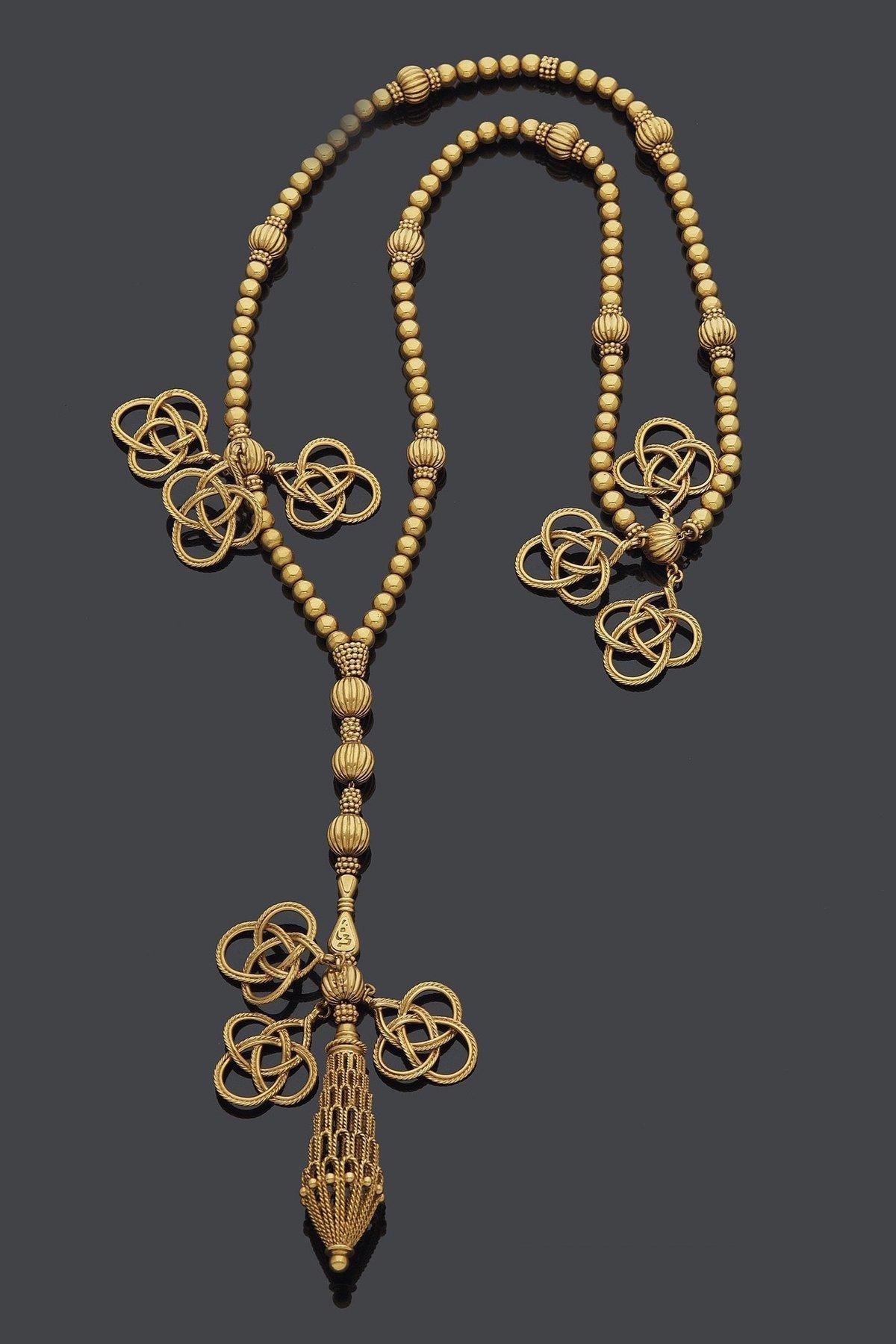
“Chapelet musulman” sautoir, c. 1970
€45,500
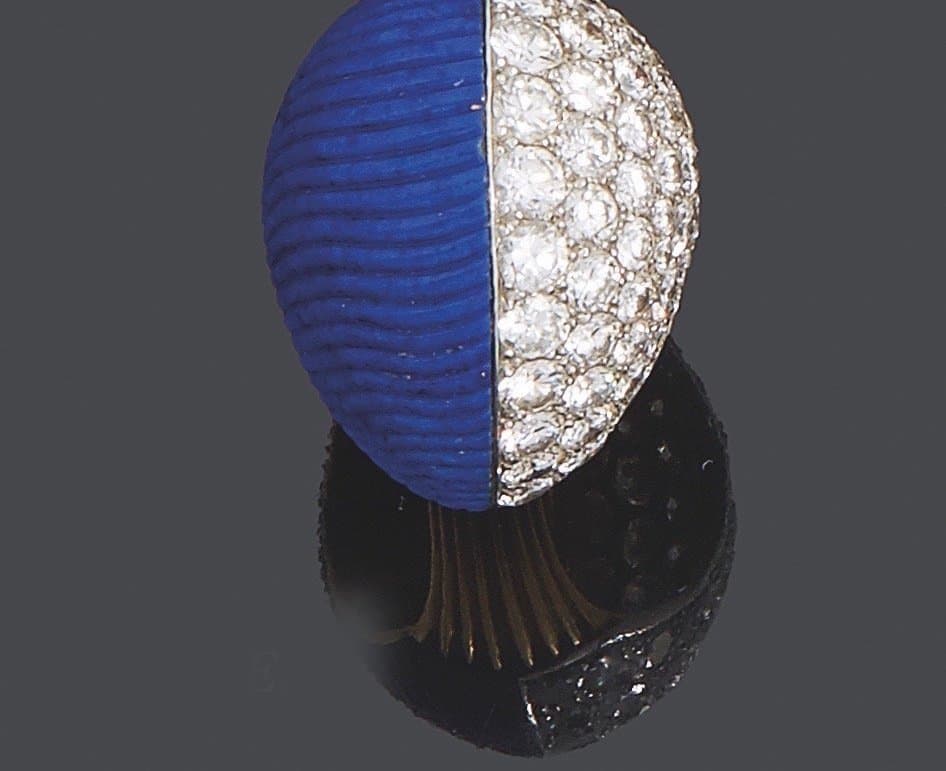
“Boule” ring, c. 1969
€49,500
Art Deco necklace, 1925
American collection
Results published by the firm in 2020
Search Cartier in the sales historyLearn more
The house’s history
Founded in Paris in 1847 by Louis-François Cartier, the house established itself by the late nineteenth century as jeweler to the courts of Europe. Its platinum work, of unprecedented delicacy, earned it a royal clientele and the epithet “jeweler of kings”.
The 1920s and 1930s marked a summit: geometric Art Deco jewels, pairings of onyx, coral and diamonds, designs drawn from Egypt, Persia and India. These pieces are among the most sought-after on today’s market.
After the war the house pursued an instantly recognizable repertoire of “Boule” rings, Eastern-inspired sautoirs, panthers, which sustains steady auction demand, from collectors’ jewels to grand ceremonial pieces.
Recognising a Cartier piece
An authentic Cartier piece is identified by a converging set of clues, never by one alone.
The signature
The engraved signature “Cartier” or “Cartier Paris”, together with an inventory number.
The hallmarks
The hallmarks: metal fineness (the eagle’s head for 750 ‰ gold in France) and, frequently, the workshop’s maker’s mark.
The workmanship
The quality of execution: even settings, reverses finished as carefully as the front, precise mechanisms.
The documents
Cases, invoices and literature references that reinforce the attribution: a signature alone can be spurious; expert examination checks that everything is consistent.
The results in detail
“Chapelet musulman” sautoir, yellow gold, circa 1970
Signed Cartier Paris and numbered, sold at auction for €45,500 (result published in 2020). The model first appears at Cartier in 1947 and is reproduced full-page in “Étourdissant Cartier, la création depuis 1937”.
“Boule” ring, platinum and gold, lapis lazuli and diamonds, circa 1969
Signed Cartier Paris, numbered, with the jeweler’s maker’s mark, sold at auction for €49,500 (result published in 2020).
Art Deco necklace, 1925
Acquired by an American collector sight unseen: the expert description and the file were enough to carry the piece across borders.
How do I sell Cartier jewellery at auction?
Open a file through Cabinet Annabelle Cukierman’s “Sell a piece or a collection” process: a few photographs, the signature or number if you can see them, any documents you hold. You will hear from us within two business days, and your Cartier piece is then presented in the most suitable sale, at one of the firm’s partner houses.
How can I tell if a Cartier jewel is genuine?
On a Cartier jewel, an engraved signature with a number, hallmarks, quality of execution and documents form a converging set of clues. None is sufficient on its own: spurious signatures exist, and expert examination checks that the whole is consistent.
What is vintage Cartier jewellery worth?
Value depends on period, model, materials, condition and documentation. Art Deco pieces and the great signed classics are the most fiercely contested: a Cartier “Chapelet musulman” sautoir circa 1970 sold for €45,500, and a “Boule” ring circa 1969 for €49,500. These results, published by the firm in 2020, offer concrete benchmarks.
Do I need a certificate to sell a Cartier piece?
No. A case, invoice or certificate strengthens the file, but their absence prevents nothing: expertise establishes the attribution of a Cartier jewel from the piece itself.
Selling a Cartier piece at auction
We describe it, document it and present it in the sale best suited to its market.
Reply within two business days. Strict confidentiality.